


Credit: Tom Sofield/NewtownPAPNow.com
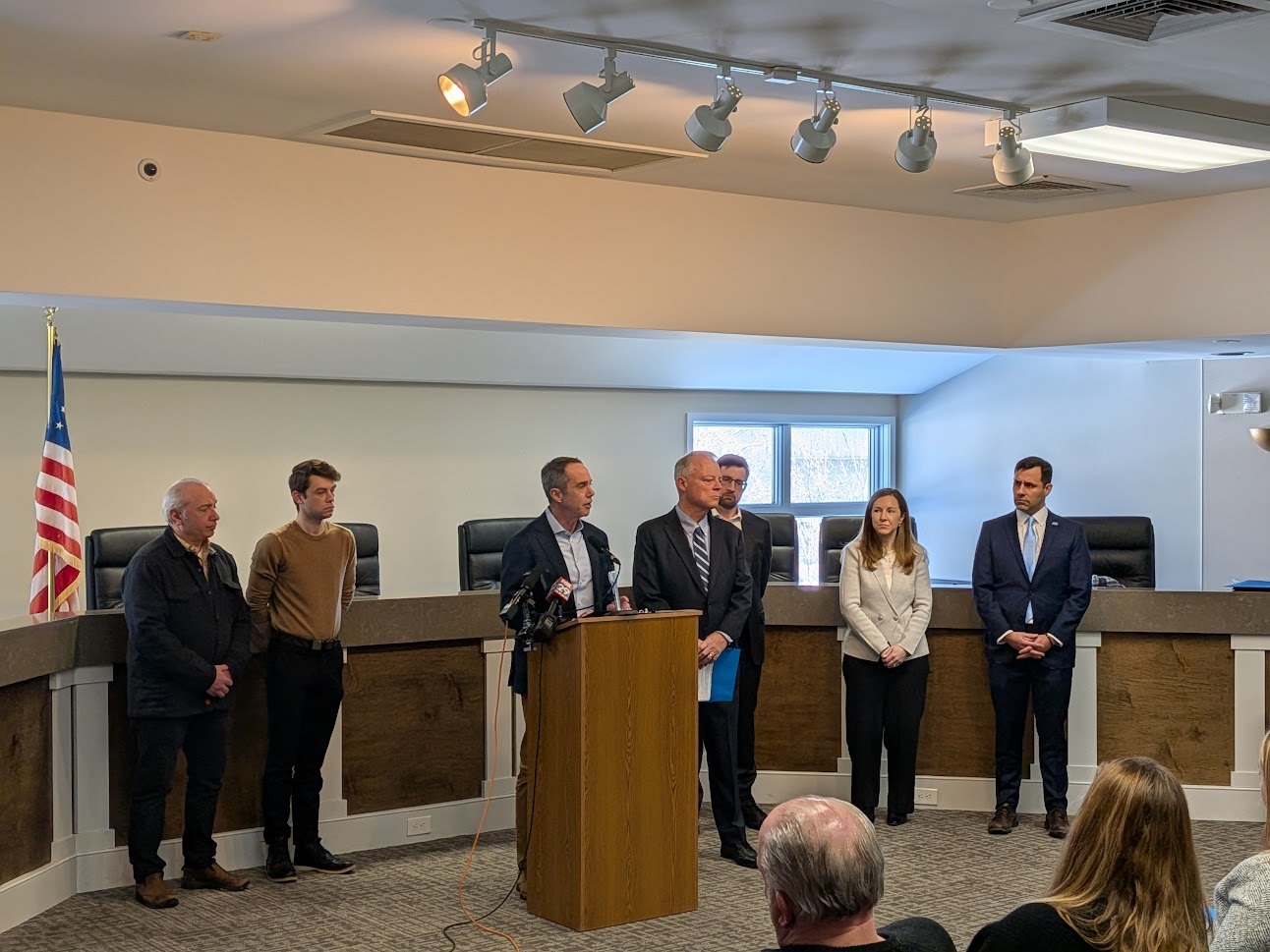
A year after it was confirmed a jet fuel pipeline leak contaminated drinking water in Upper Makefield Township’s Mount Eyre neighborhood, State Sen. Steve Santarsiero and State Rep. Perry Warren, both Democrats, on Friday introduced legislation aimed at overhauling Pennsylvania’s environmental response laws.
The proposed Pennsylvania Environmental Cleanup and Responsibility Act (ECRA) seeks to close loopholes that lawmakers say have allowed the pipeline operator, Sunoco Energy Transfer, to avoid a quicker remediation.
Advertisements
To date, the company has recovered less than 25 percent of the estimated 6,500 gallons of jet fuel leaked, according to Upper Makefield Township officials.
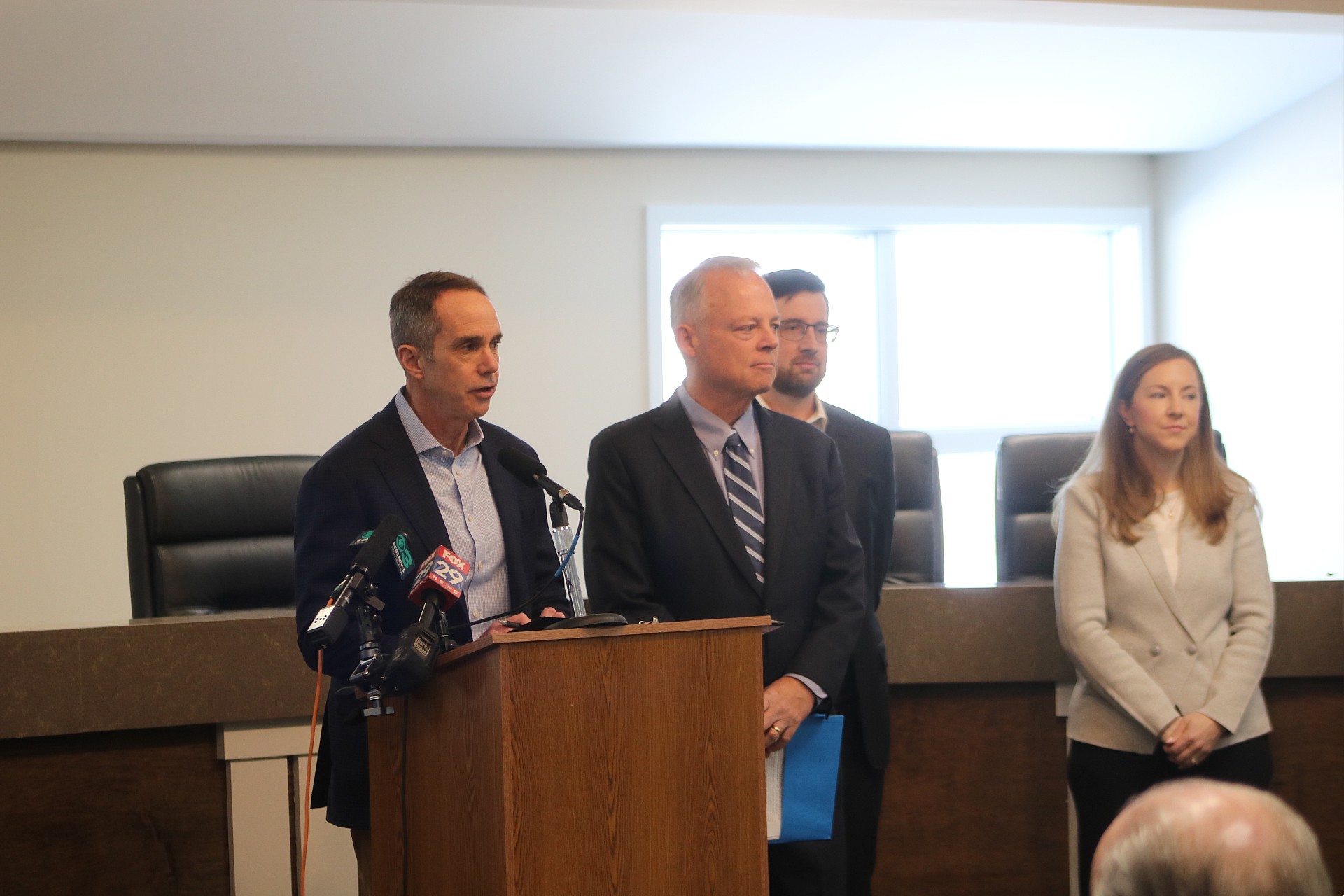
“It’s a year ago that Sunoco finally acknowledged what residents in the Mount Eyre neighborhood knew — that their pipeline which carries jet fuel through the neighborhood had been leaking,” Santarsiero said during a press conference.
Credit: Tom Sofield/NewtownPANow.com
The legislation would establish strict liability for polluters, mandate enforceable cleanup timelines, and empower the Pennsylvania Department of Environmental Protection to seize control of cleanup efforts if a responsible party fails to act.
Advertisements
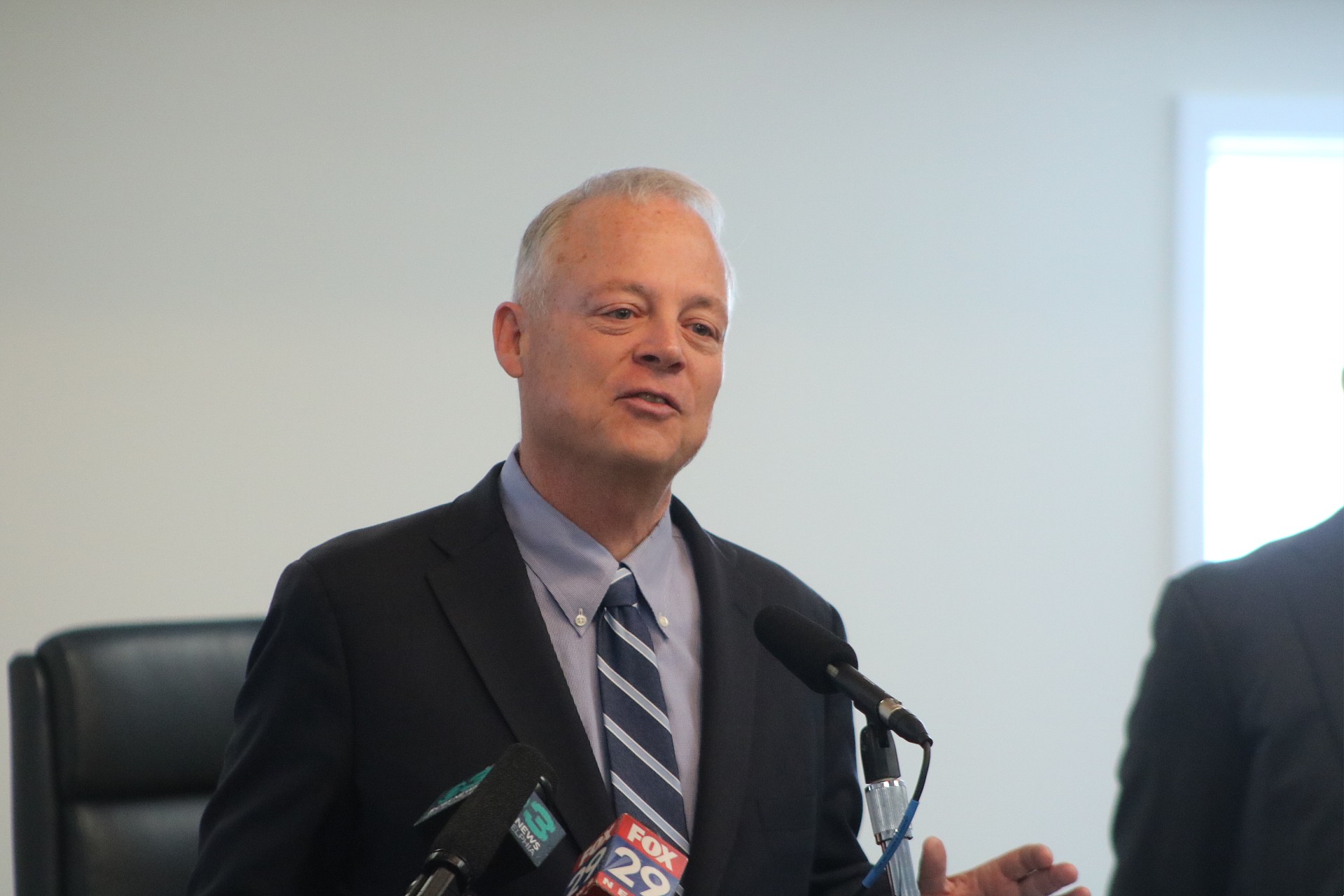
Warren noted the disparity between Pennsylvania and neighboring New Jersey.
Credit: Tom Sofield/NewtownPANow.com
“If this spill had occurred two miles away, it might be a different story,” Warren said. “It would be potentially a tale of two Washington Crossings — one governed by the New Jersey Spill Act and one in which there’s very little legislation here.”
Advertisements

The federal Superfund law was modeled after New Jersey’s 1970s Spill Act, officials said.
According to Santarsiero, current state laws like the Hazardous Sites Cleanup Act and Act 2 are ill-suited for residential leaks. They often leaving remediation as a “largely voluntary” process without statutory deadlines.
Residents have said the human cost of these regulatory gaps is high.
Advertisements


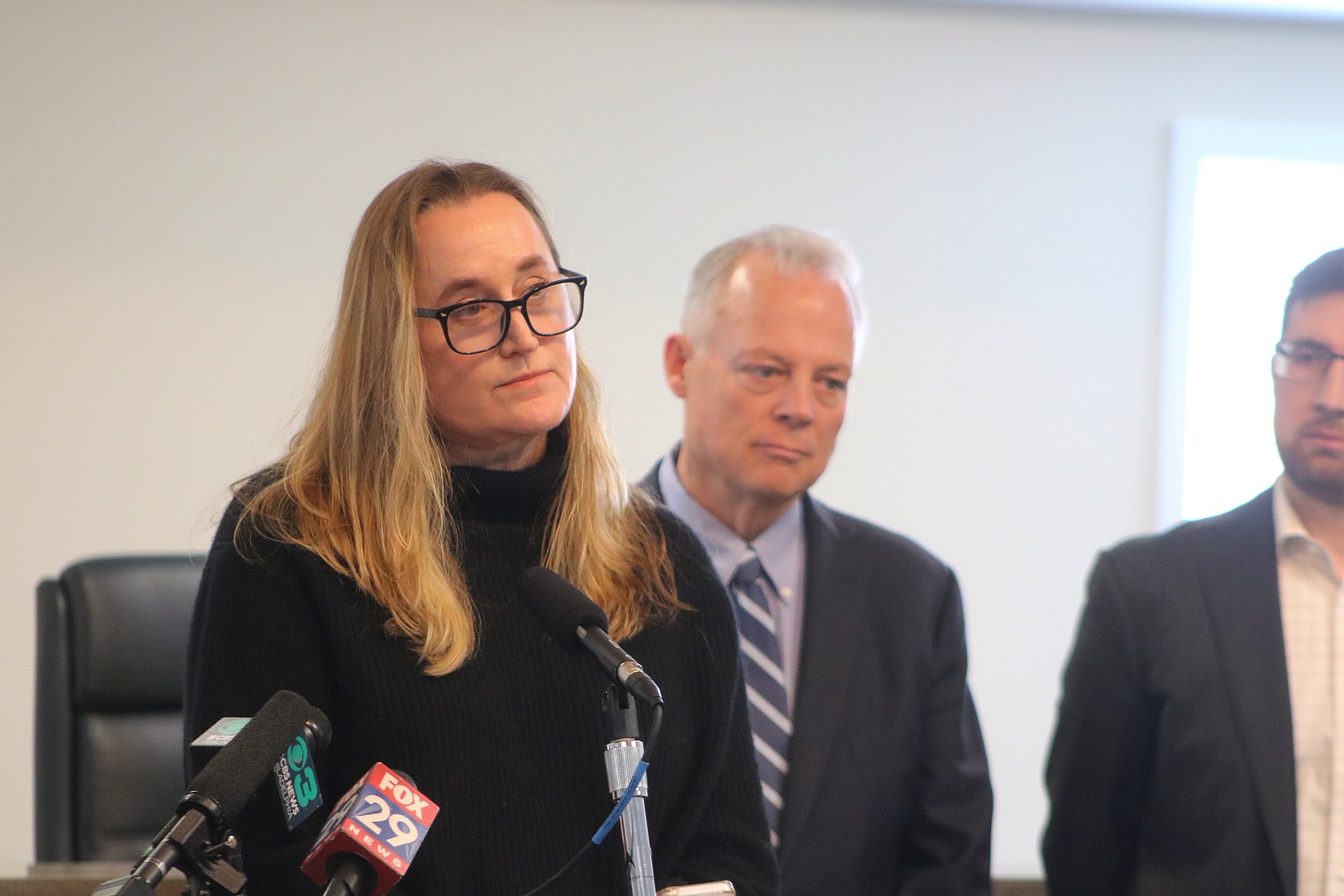
Kristine Wojnovich, a Mount Eyre resident, told reporters it has been 863 days since her family first reported the smell of fuel to Sunoco’s emergency line.
Credit: Tom Sofield/NewtownPANow.com
The company did not acknowledge the leak as the source of contamination until Jan. 31, 2025.
Advertisements


“A year since the leak was identified, our well is still contaminated,” Wojnovich said.
Upper Makefield Township Board of Supervisors Chairperson Ben Weldon described a community living in “constant worry” over the safety of the water they use to drink, bathe, and cook.
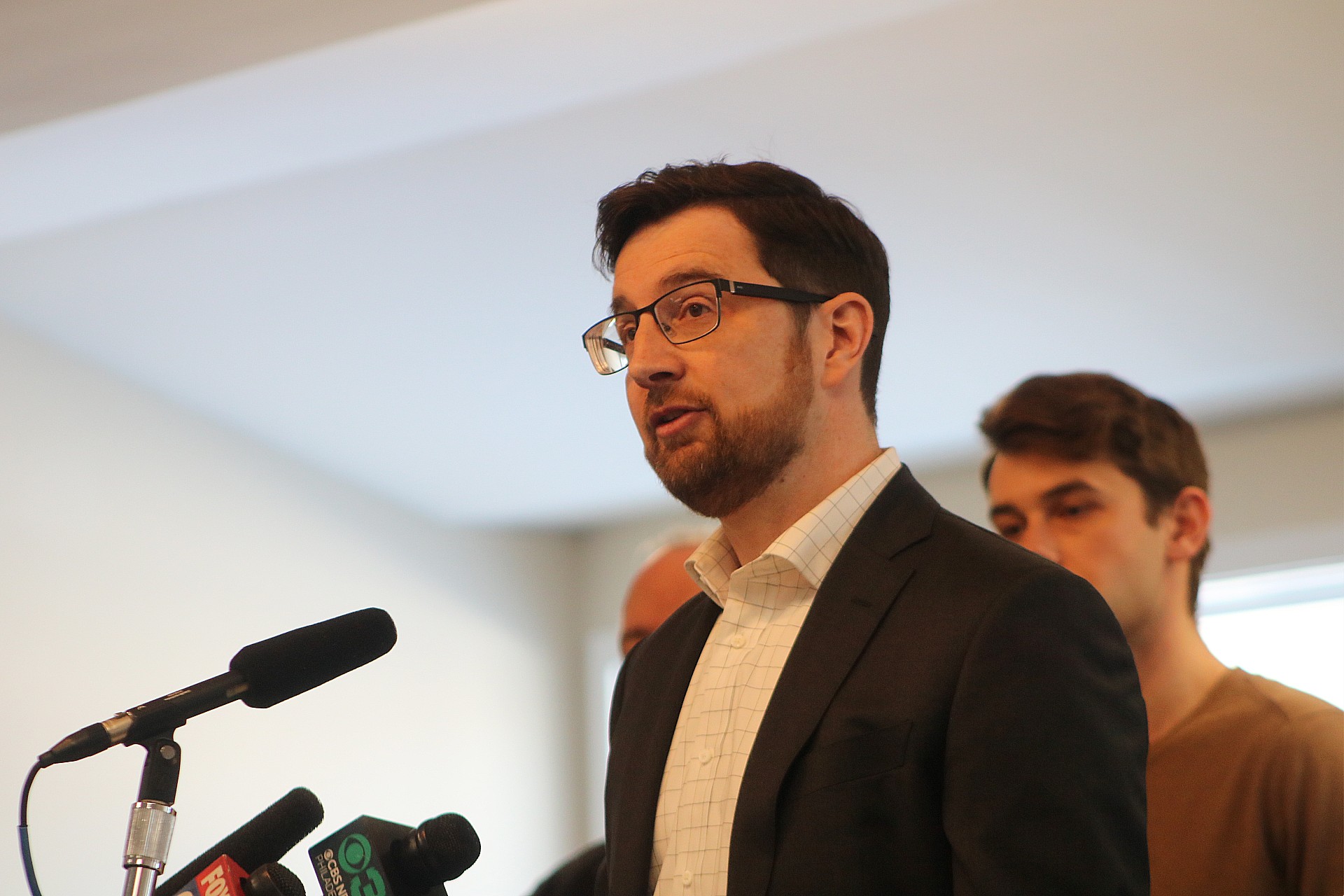
Credit: Tom Sofield/NewtownPANow.com
Bucks County District Attorney Joe Khan, who took office last month, pledged his office’s support for an ongoing criminal investigation by the Pennsylvania Attorney General.
Khan announced he has given his staff 120 days to develop a plan for a local environmental protection unit.
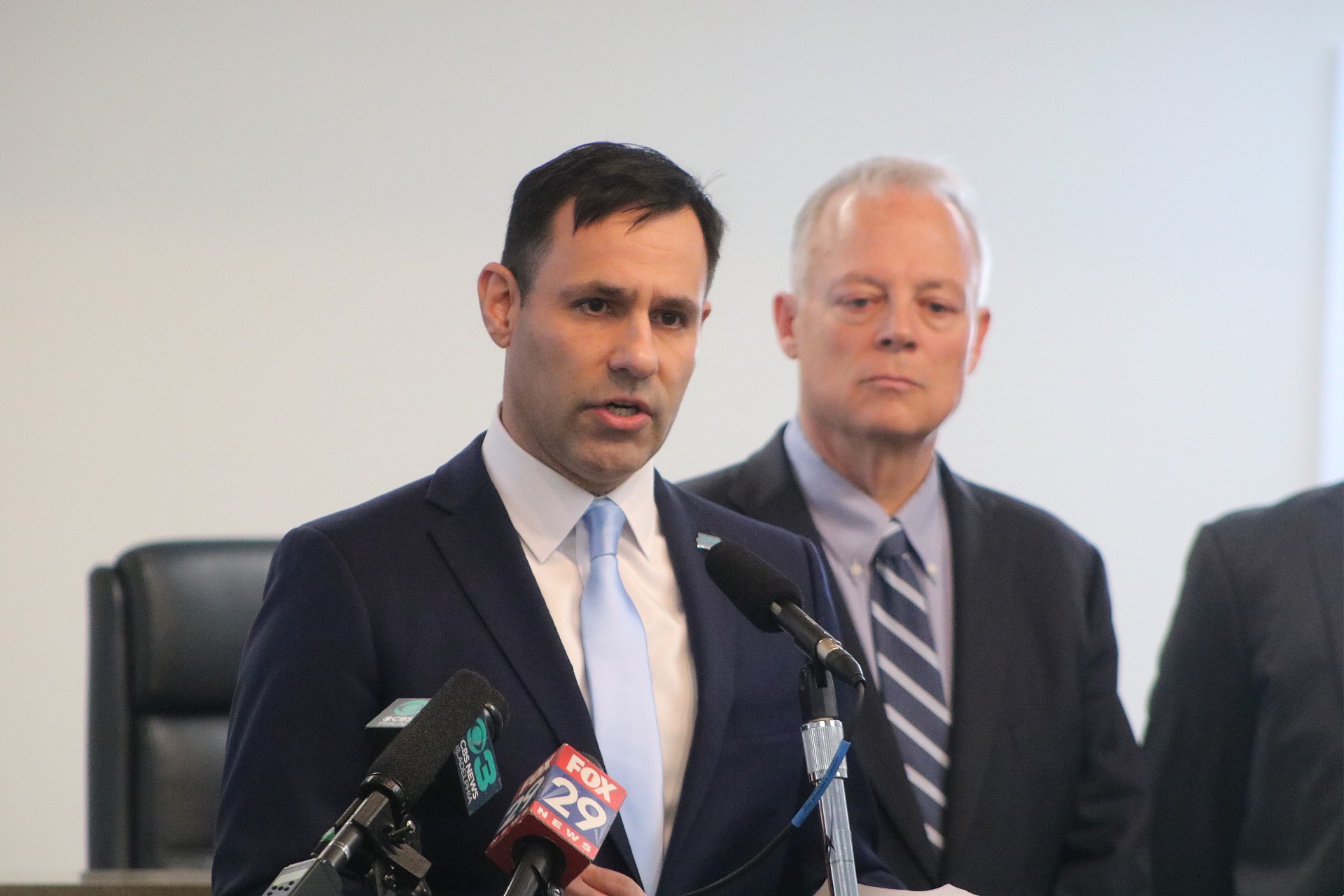
Credit: Tom Sofield/NewtownPANow.com
“The right to pure water is not a privilege, it is a right that everyone in Pennsylvania has,” Khan said.
The leak originated from a Sunoco line running between Newark and Philadelphia.

Advertisements
Federal investigators with the Pipeline and Hazardous Materials Safety Administration (PHMSA) traced the failure to a faulty sleeve installed in 1995 over a dented section of pipe.
While federal agencies oversee pipeline operations, Santarsiero said that only the Pennsylvania Department of Environmental Protection has the authority to mandate full contaminant removal.

Credit: Submitted
The new bill would require the Pennsylvania Department of Environmental Protection to create a public portal so residents can track cleanup progress in real-time.
The lawmakers expect to circulate co-sponsorship memos for support in Harrisburg over the coming weeks.
Santarsiero plans to introduce the Senate version in late February, with House consideration slated for March.
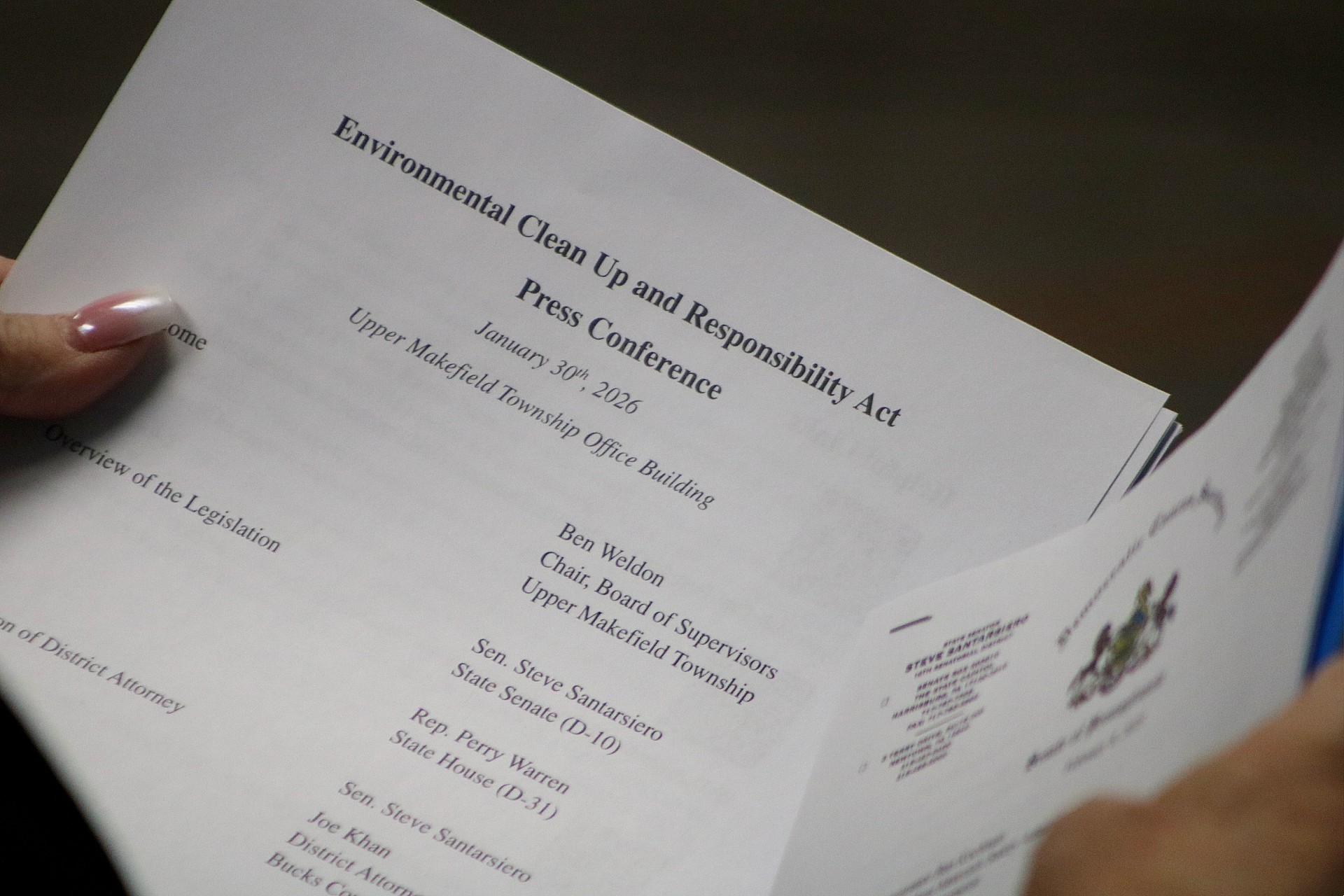
The bill has already received an endorsement from Clean Water Action.
Despite the legislative proposal, some residents have called for the pipeline to be shut down entirely.
U.S. Sen. John Fetterman, a Democrat, and U.S. Sen. Dave McCormick, a Republican, along with GOP Congressman Brian Fitzpatrick, are also working with the community on recovery efforts.