


By Peter Hall | Pennsylvania Capital-Star
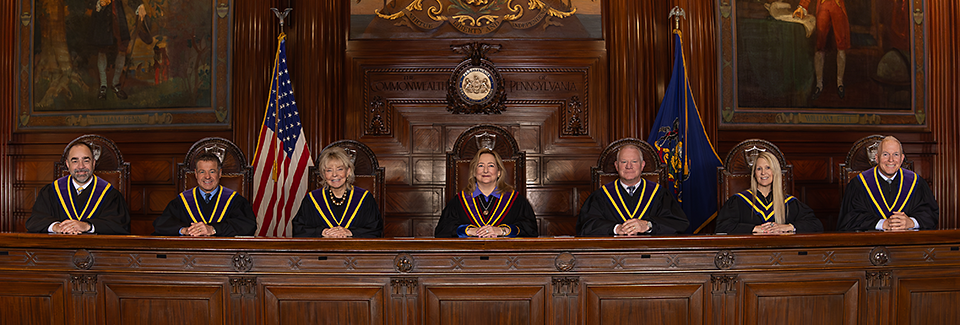
Credit: Administrative Office of Pennsylvania Courts
Pennsylvania’s Constitution grants the fundamental right to reproductive autonomy, a state court ruled Monday in a long running challenge to the commonwealth’s ban on Medicaid subsidies for abortion.
Advertisements
In its 4-3 ruling in favor of a group of Pennsylvania women’s health clinics, the Commonwealth Court struck down the coverage exclusion for abortion contained in the state’s 1982 Abortion Control Act as unconstitutional sex-based discrimination.
Although that finding was enough for the court to dispose of the case, the majority took an additional step of declaring that the right to abortion is fundamental. The state’s justification for any infringement on that right is subject to the highest degree of legal scrutiny, the court held.
That means the state can restrict the right only when it can demonstrate compelling interest in doing so, the majority said. They sided with a plurality of state Supreme Court justices in a decision last year that kicked the case back to the lower Commonwealth Court.
Advertisements
“We agree with providers that recognizing this fundamental right, as the plurality did, is necessary to restrict state government to its proper sphere, thus protecting our liberty,” Judge Matthew S. Wolf said in his 40-page majority opinion. “This will mean that the state will face judicial scrutiny of its attempts to coerce reproductive choice. Those choices are the people’s, not the government’s.”
In Monday’s opinion, the majority also said state Attorney General Dave Sunday’s office had failed to show either a compelling state interest or that the exclusion was the least restrictive way to accomplish its interest.
Advertisements

David S. Cohen, a Drexel University professor of constitutional law who assisted in litigation, said the finding of a fundamental right to abortion in the commonwealth is especially significant in the wake of the U.S. Supreme Court’s Dobbs v. Louisiana decision. That 2022 decision overturned the nearly 50-year-old precedent in Roe v. Wade that established a right to abortion under the federal constitution.
The underlying lawsuit was filed in 2019 by the Allegheny Reproductive Health Center, Allentown Women’s Center, Delaware County Women’s Center, Planned Parenthood Keystone and the organization’s southeastern and western Pennsylvania chapters.
Since then, the lawsuit has been through Commonwealth Court and the state Supreme Court twice. In January 2024, the high court reversed the lower court’s 2021 decision dismissing the case.
Advertisements


In that 3-2 decision, the Supreme Court overturned a 42-year-old decision that upheld the constitutionality of the Abortion Control Act’s ban on Medicaid-funded abortions except in cases of rape or incest. The Commonwealth Court cited that decision as the basis for dismissing the lawsuit.
Justice Christine Donohue, author of the state’s highest court’s lead opinion, and Justice David Wecht agreed that “the right to reproductive autonomy, like other privacy rights, is fundamental.”
Advertisements


Justice Kevin Dougherty, who concurred in the overall result of the decision, said he agreed with dissenting Chief Justice Debra Todd and Justice Sallie Mundy that the case was not about the right to abortion and it was not the right time to decide whether there is a fundamental right. He added the question was likely to return to the Supreme Court.
Susan Frietsche, executive director of the Women’s Law Project in Pittsburgh, said Monday the Medicaid coverage exclusion was the single largest barrier to abortion access in Pennsylvania. The plaintiffs noted the ban disproportionately affects low-income and minority women.
“We moved a giant step in the direction of removing it,” Frietsche said, adding that it’s unclear whether Sunday, a Republican elected in 2024, would appeal Monday’s decision
“But what is now in Pennsylvania law that I don’t believe an appeal would disturb, is the constitutional principle that equality of rights under the law guaranteed by our state Equal Rights Amendment includes reproductive rights,” Frietsche added. “And that is a big, significant and very meaningful win for the women of Pennsylvania.”
Sunday’s spokesman said the attorney general’s office is reviewing the opinions.
Cohen noted the court permitted Sunday to intervene in the case as a new attorney general.
Advertisements
“It’s one thing, to intervene at a state being litigated, and it’s another, to take an appeal and spend taxpayer dollars to defend something to a court that has already, you know, strongly indicated that this law is unconstitutional,” Cohen said.
While the defendant in the case is the state Department of Human Services (DHS), part of the executive branch, the Pennsylvania attorney general has the authority to defend state law under the Commonwealth Attorneys Act. That law delineates the responsibilities of the attorney general and the governor’s appointed general counsel.
Gov. Josh Shapiro, who is seeking reelection this year, announced following the Supreme Court’s ruling that DHS would no longer defend the abortion coverage exclusion.

Credit: Tom Sofield/LevittownNow.com
“I’ve long opposed this unconstitutional ban,” Shapiro said in a social media post. “I did not defend it – because a woman’s ability to access reproductive care should never be determined by her income.”
State Treasurer Stacy Garrity, the presumptive Republican nominee for governor, responded strongly to the ruling in a series of X posts.

“The Pennsylvania Commonwealth Court’s decision to force our tax dollars to pay for abortions is not only misguided, it is immoral. It is also deeply concerning that Governor Josh Shapiro’s administration withdrew as respondents in this case,” Garrity posted, also noting the Abortion Control Act was passed with bipartisan support and that using Medicaid funding for abortion would violate a federal ban.
While Sunday’s filings said he accepts the Supreme Court’s holding that the Medicaid exclusion is sex-based discrimination, he offered three state interests that he argued are compelling and for which blocking coverage was the least intrusive means of achieving.

Credit: PA Internet News Service
Sunday argued the state has an inherent right to protect the life and health of a fetus subject to abortion, an interest in protecting the health of women and “not violating the conscience of those who oppose abortion.”
The Commonwealth Court majority rejected each of the attorney general’s office’s arguments, saying it had not shown they are compelling interests. It noted the providers argued persuasively that many other government-funded initiatives would serve achieve those goals without restricting reproductive autonomy.
“Any state interest in promoting carrying a pregnancy to term is furthered at least as well by state investment in maternal and infant healthcare, and in childcare and other resources for new mothers, as it is by the Coverage Exclusion,” Wolf wrote.
Pennsylvania Capital-Star is part of States Newsroom, a nonprofit news network supported by grants and a coalition of donors as a 501c(3) public charity. Pennsylvania Capital-Star maintains editorial independence. Contact Editor Tim Lambert for questions: info@penncapital-star.com.