



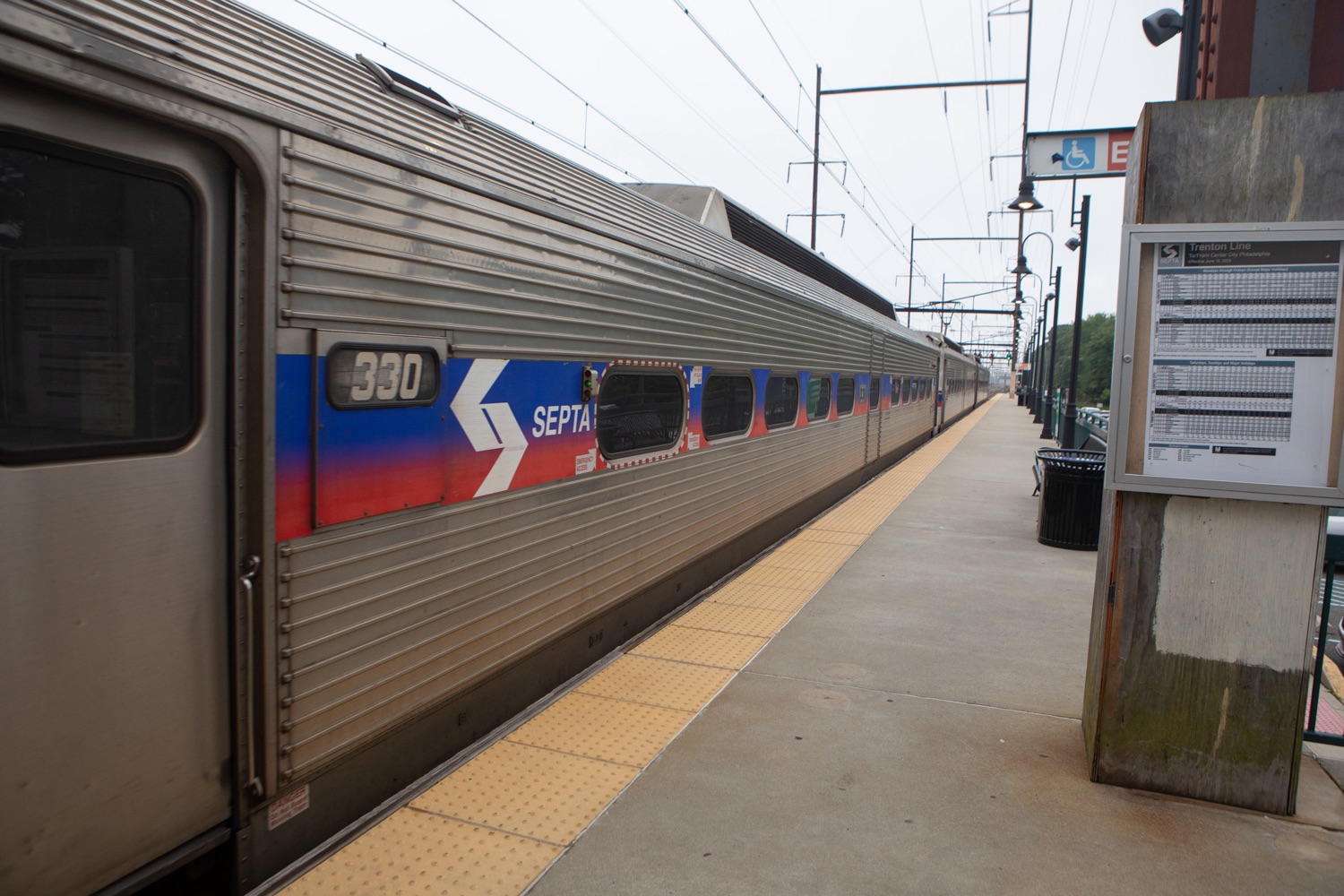
SEPTA officials announced an ambitious plan Tuesday aimed at growing Regional Rail service into Lower Bucks County.
The vision plan, which is titled “Accelerate,” outlines goals to create a more predictable transit system.
Advertisements
If fully implemented, the project’s multi-phase rollout would add expanded service across SEPTA’s footprint between 2030 and 2050.
Under the transit agency’s plan, Regional Rail trips heading into Lower Bucks County would see frequency increases. Trains would stop at the Bristol Borough and Croydon stations every 30 minutes, while service to the Levittown and West Trenton stations would operate on 60-minute intervals. Additionally, the Warminster Line would run every 30 minutes, and the Doylestown Line would operate every 60 minutes from the borough station.
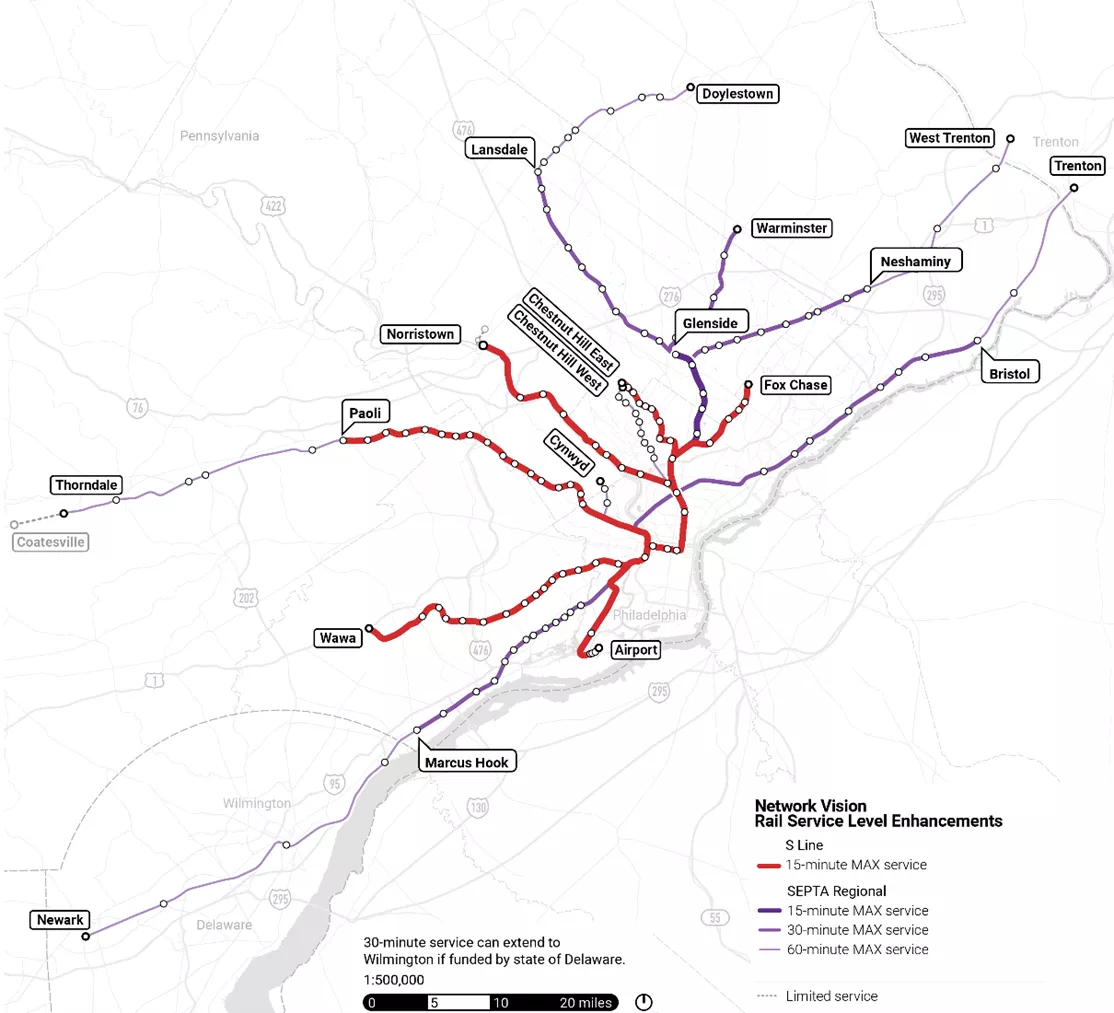
The Doylestown Line ranks as the system’s second most-used route, followed by the West Trenton Line in third, the Trenton Line in sixth, and the Warminster Line in eighth place, according to SEPTA data.
Advertisements
SEPTA announced Tuesday that it is launching the bidding process to acquire 230 new Silverliner VI Regional Rail cars.
Agency officials expect the new fleet to deliver service intervals of 15 minutes or better at nearly half of the system’s approximately 150 stations.
Advertisements

The strategy also includes establishing three “S” through-running lines, which will provide 15-minute service frequencies across the Airport, Wawa, Fox Chase, Paoli, Chestnut Hill East, and Norristown lines.
The Regional Rail network—which spans Southeastern Pennsylvania into Delaware and New Jersey with links to Amtrak, PATCO Speedline, New Jersey Transit, and Philadelphia International Airport—traces its origins to railroad systems constructed in the 1800s and early 1900s.
SEPTA took over direct ownership and operation of the train lines in 1983 from the former Pennsylvania Railroad and Reading Company.
Advertisements


While officials noted the inheritance left the agency with a large system, it also means an extensive backlog of maintenance requirements.
“In 2019, most lines had trains at least every 60 minutes from 5:00 AM to 10:00 PM on weekdays, and some lines had that level of service on weekends as well,” according to the plan document. “Regular all-day service allows riders to depend on Regional Rail for all kinds of trips.”
Advertisements


As a way to support the extra trips, SEPTA plans to continue hiring and training crew members to overcome labor shortages that originated during the COVID-19 pandemic.
“Bringing back more service will require more train crews, and SEPTA has been focused on increasing hiring and training new staff since the historic shortages due to the COVID pandemic,” the plan states. “This emphasis on hiring and training for our train crews will continue as service is added to the system.”
Beyond Regional Rail, the overarching “Accelerate” document outlines system-wide modernization efforts. They include purchasing 130 new vehicles to update the trolley network, acquiring new subway cars, and expanding high-frequency bus routes from eight to 29.
SEPTA projects that full completion of the vision would expand the number of residents living within a quarter-mile of frequent transit from 900,000 to more than 2 million, while raising overall station accessibility from 60 percent to 100 percent.
SEPTA General Manager Scott Sauer has focused on a “back to basics” approach to stabilize the agency amid budget pressures and aging equipment issues.
Credit: Submitted
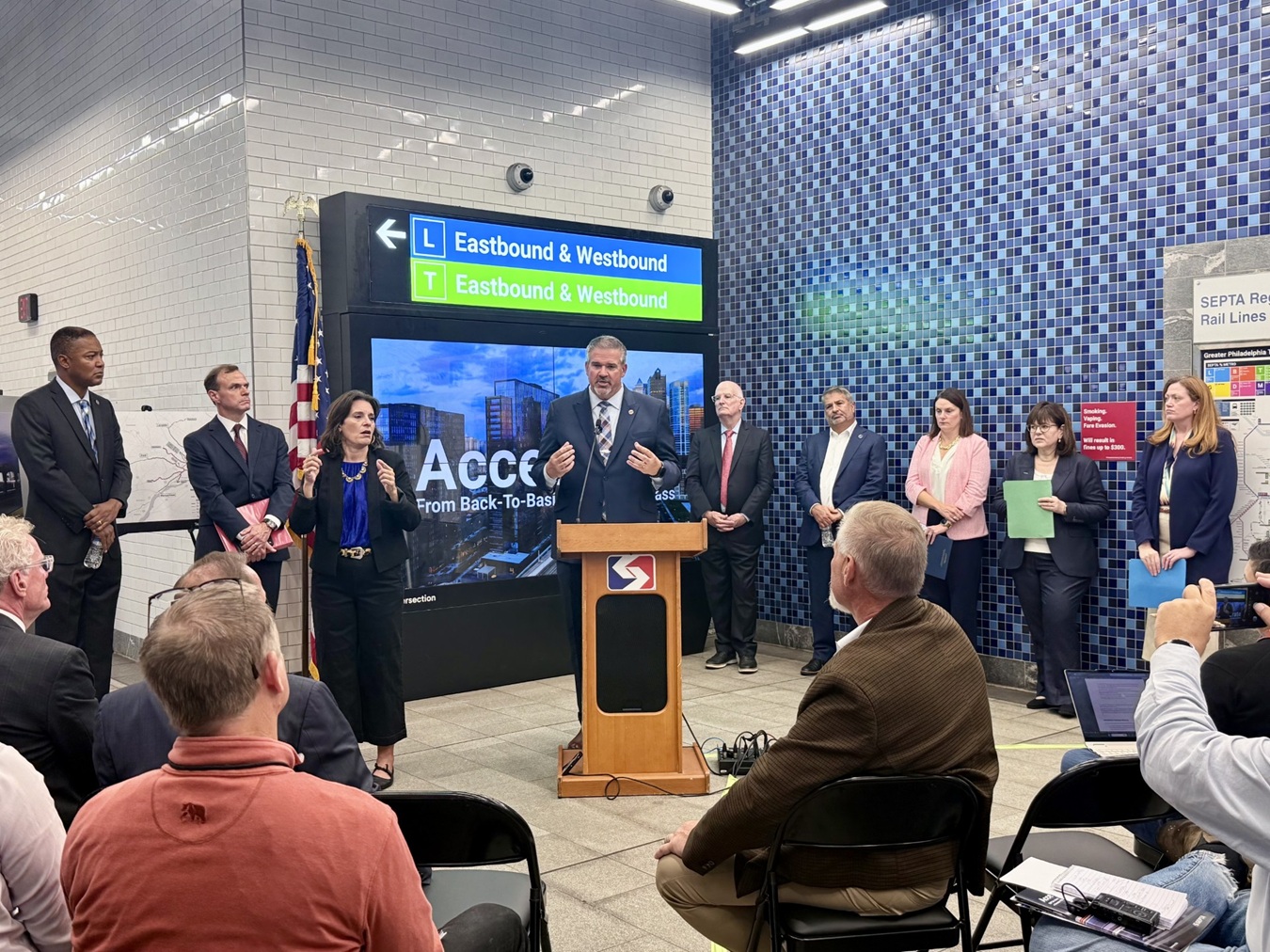
“Imagine a world where SEPTA is a reason to move here, work here, and locate or expand a business here,” Sauer said in a statement. “Our region deserves and demands a transit system that works better for more people. From planning their trip to the moment they reach their destination, every part of the journey will be safer, more reliable, and fully accessible. We are already at work to bring this vision to reality.”
Advertisements
Stephen Noll, executive director of TMA Bucks, cited the economic potential for Bucks County residents.

Credit: Tom Sofield/NewtownPANow.com
“SEPTA’s Accelerate vision represents a significant opportunity for Bucks County,” Noll said. “More frequent and reliable Regional Rail, improved bus service, expanded on-demand transportation, and greater accessibility will give residents and businesses more ways to connect to jobs, services, and communities throughout the county and the region.”
Chellie Cameron, president and CEO of the Chamber of Commerce for Greater Philadelphia, spoke of the regional commercial benefits.
“Our transit system is one of our region’s greatest assets,” Cameron said. “Accelerate is a vision for what’s possible when we invest in a reliable, modern system that connects people to jobs, businesses to talent, and communities across Greater Philadelphia to opportunity.”
SEPTA is operating under a $1.84 billion operating budget and $920.7 million capital plan and has been working to secure its financial footing. The transit agency will need to find a long-term funding solution from Harrisburg ahead of its next fiscal year.
Through cuts and evaluations of the system, SEPTA has cut $30 million in yearly spending and grown income from parking, advertising, and investments.