

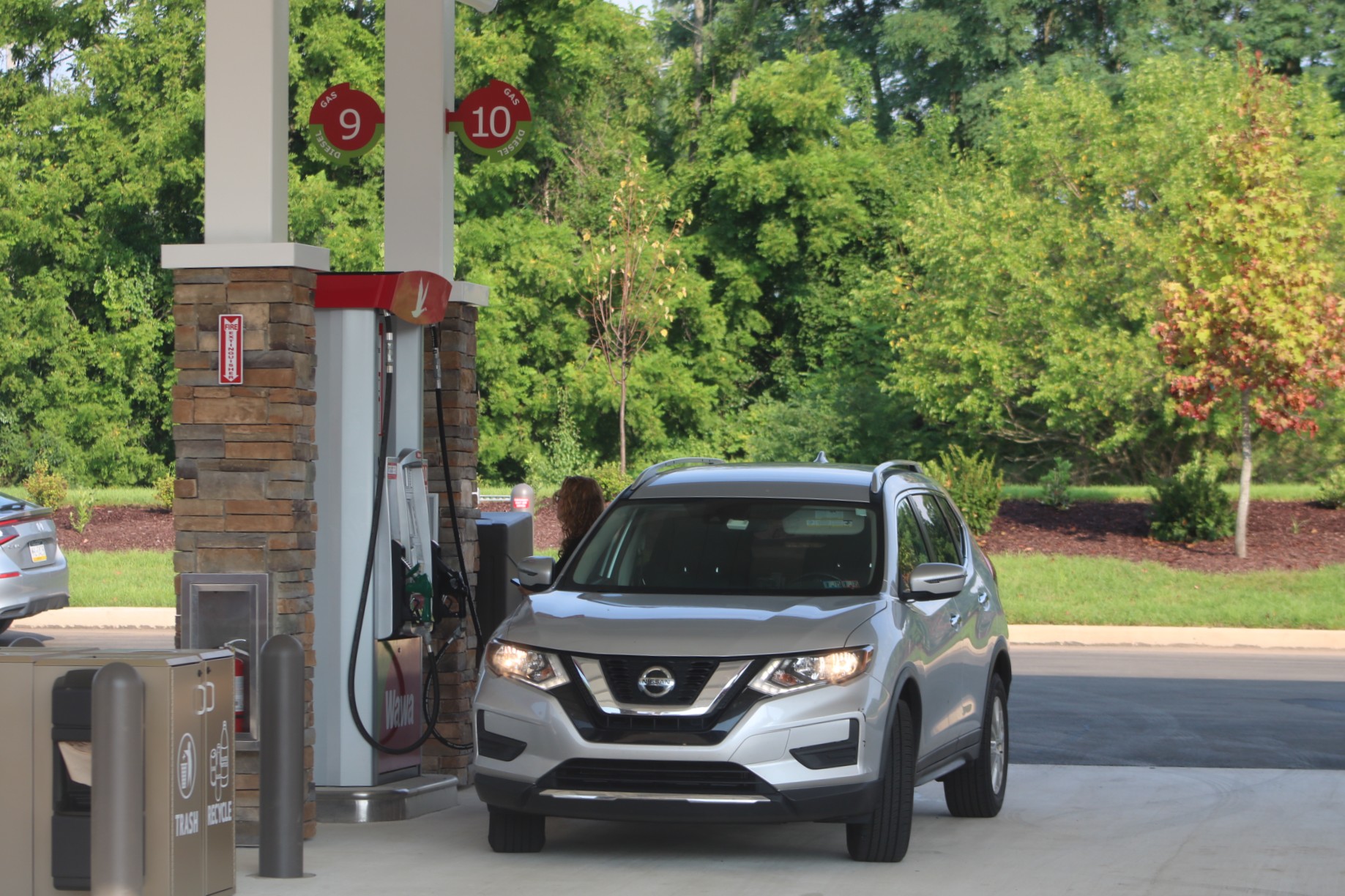
Gas that costs $4 per gallon is back in the Newtown area.
The rapid surge that has pushed local fuel costs to their highest levels since 2022.
Advertisements
According to data from GasBuddy, prices in Newtown as of Thursday ranged from $3.89 to $4.09.
The regional average has jumped nearly $1 over the past month, according AAA’s numbers.
Diesel prices have seen an even sharper spike, coming in at around $6 per gallon in the area.
Advertisements
AAA Mid-Atlantic reported Thursday that the average price for a gallon of gas in Pennsylvania rose 13 cents over the last week to $3.95.
The statewide number is just below the national average of $3.98.
Advertisements

While prices typically rise in the spring due to increased travel and the transition to seasonal fuel blends, experts said the pace current of the increase is rare.
Local prices topped $5 per gallon in the summer of 2022. Before that, the previous record occurred in 2008 during the Great Recession.
Adjusted for inflation, the 2008 peak gas prices in Bucks County would equal roughly $6.08 per gallon today.
Advertisements


The primary driver of the surge is high crude oil prices stemming from the ongoing war between the U.S., Israel, and Iran, experts said.
A critical maritime chokepoint, the Strait of Hormuz, remains blocked to most tankers due to attacks and mines from Iran.
Advertisements


The narrow waterway carries approximately 20 percent of the world’s oil supply, and analysts warn that global supplies will be impacted for months unless a resolution is reached.
“It now appears increasingly likely that the national average price of gasoline will reach the $4-per-gallon mark—potentially as early as this week—for the first time since 2022,” said Patrick De Haan, head of petroleum analysis at GasBuddy. He noted that diesel is nearing record territory in some markets and that consumers may soon begin to reduce spending in response to the costs.
The International Energy Agency (IEA) stated the conflict is pushing crude prices higher and causing even significant increases for diesel, jet fuel, and liquefied petroleum gas.
The IEA is currently advising governments and consumers to look at reducing usage to ease global demand.
In an effort to provide some relief at the pump, the U.S. Environmental Protection Agency has issued a waiver allowing the sale of E15 gasoline, a 15 percent ethanol blend, until May 20. E15 is typically restricted during the summer months due to air pollution.
The Wall Street Journal reported Thursday that President Donald Trump has informed White House officials he wants the war concluded within four to six weeks.
Advertisements
The U.S. military has deployed additional personnel to the region, and Trump has stated that negotiations are underway, while Iranian officials have denied that any serious talks are occurring.
The U.S. Department of Energy provided the following strategies to save fuel:
• Minimize idling your car by turning off your engine when your vehicle is parked for more than 10 seconds. Idling can use a quarter to a half gallon of fuel per hour, depending on engine size and air conditioner use, adding up to three cents of wasted fuel a minute. In the winter, most manufacturers recommend driving off gently after about 30 seconds. The engine will warm up faster being driven, which will allow the heat to turn on sooner, decrease your fuel costs, and reduce emissions.
• Drive sensibly and avoid aggressive driving, such as speeding, rapid acceleration, and hard braking. Aggressive driving can lower your highway gas mileage by 15 percent to 30 percent and your city mileage by 10 percent to 40 percent.
• Avoid driving at high speeds. Above 50 mph, gas mileage drops rapidly. For every 5 mph above 50 mph, it’s like paying an additional $0.22 per gallon of gasoline.
• Reduce drag by placing items inside the car or trunk rather than on roof racks, which can decrease your fuel economy by up to 8 percent in city driving and up to 25 percent at Interstate speeds.
• Avoid keeping heavy items in your car; an extra 100 pounds in your vehicle could increase your gas costs by up to $.03 cents per gallon.
• Combine errands. Several short trips, each one taken from a cold start, can use twice as much fuel as one trip covering the same distance when the engine is warm.
• Check into telecommuting, carpooling, public transit and active transportation like bicycling or walking to save on fuel and car maintenance costs. Many urban areas provide carpool lanes that are usually less congested, which means you will get to work and home faster and more refreshed.