

By Emily Previti & Ian Karbal | Pennsylvania Capital-Star
After a high profile string of deadly shootings, Democratic lawmakers in the state House are moving to tighten Pennsylvania’s firearm laws.
Advertisements
The House Judiciary committee passed four bills on Monday. One would institute red flag laws, which allow law enforcement to temporarily seize people’s firearms if a judge rules them a likely danger to themself or others.
The others would ban devices that convert semi-automatic guns to automatic fire, require background checks for long gun purchases, and ban weapons that can avoid magnetometer detection, like 3D printed “ghost guns.”
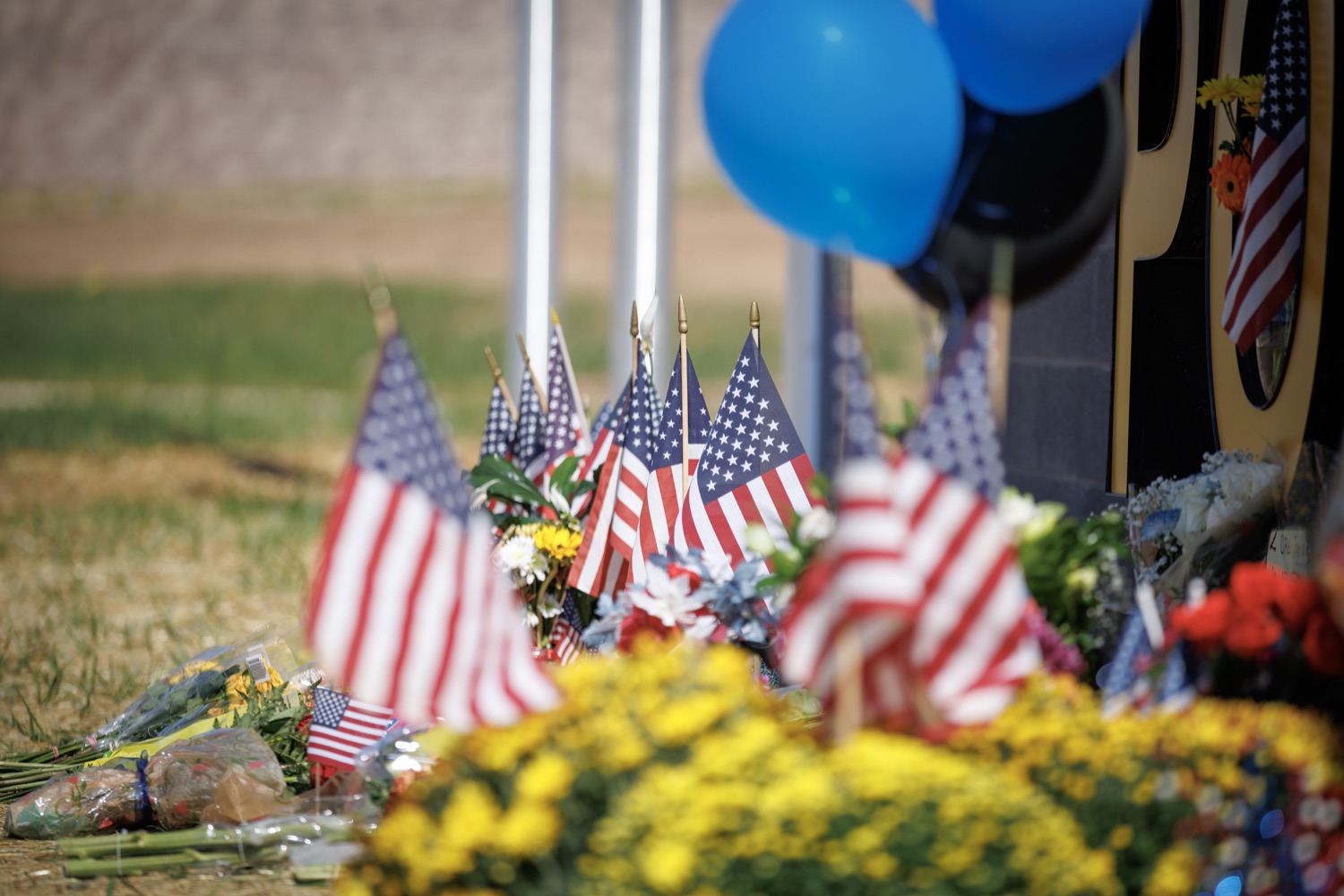
The hearing followed the assassination of conservative activist Charlie Kirk at an event on the Utah Valley University Campus in Utah earlier this month. That same day, a gunman killed one student and injured two others at a high school outside Denver, Colorado. And last week, three law enforcement officers were killed during a shootout in York County while investigating a reported stalker.
Advertisements
While all four bills advanced along party lines, the hearing was, at times, contentious.
One Republican lawmaker, Rep. Stephanie Borowicz (R-Clinton), said they amount to “an attempt by the left to try to disarm the opposition.”
Advertisements

“None of the bills today will ever single save a single innocent life, because criminals don’t obey laws, and everyone knows that,” she added. “If we wanted to save innocent lives, they would work to put God and the Bible back into our schools, and restore the nuclear family.”
Republicans, in the minority on the committee, broadly characterized the bills as infringements on the Second Amendment and, in some cases, redundant given existing laws. Most made efforts to respectfully engage their Democratic colleagues.
“I do not question the passion or the motive of either side,” Rep. Tim Bonner (R-Mercer) said. “As legislators elected by the people, we take our oath to enforce the Constitution and to enforce the laws that have been adopted.”
Advertisements


The Second Amendment, he said, is “sacred in our Constitution.”
Democrats framed the measures as a public safety-oriented approach that square with the Constitution.
Advertisements


“The [Second Amendment] does not grant the ability to possess any weapon whatsoever, in any manner whatsoever and for whatever purpose,” said Rep. Emily Kinkead (D-Allegheny), citing a 2008 U.S. Supreme Court ruling that set precedent for subsequent Second Amendment cases.
Kinkead also invoked the First Amendment. While all Americans have the right to free speech, there are still laws around slander, libel, terroristic threats, intellectual property and more, she said.
“No right under the Constitution is unlimited,” she said.
To become law, the bills would have to pass a vote on the full House floor, where Democrats have a single-vote majority, then pass the Republican-controlled Senate.
“Lives are lost every day to guns across the commonwealth,” said Adam Garber, executive director of the group Ceasefire PA. “So we’re hoping the House moves quickly for a vote and the Senate … puts people’s lives first.”
A ‘Red flag’ law
House Bill 1859 would temporarily prohibit someone from possessing firearms if they’re determined to be at risk of physically harming themselves or others as demonstrated by the person threatening or attempting suicide or violence, or recklessly brandishing a firearm, within the past year. Other factors the court would consider include substance use, recent gun purchases and animal cruelty.
Advertisements
The measure mirrors red flag laws enacted in Washington, D.C., and more than a dozen states. They include Connecticut and Indiana, where provisions took effect more than two decades ago.
In Pennsylvania, the current proposal matches one from last session, which built on legislation from 2021, to establish extreme risk protection orders (ERPO’s) in the commonwealth.
It would allow an ERPO to be pursued by police, a relative or household member of the person thought to be at risk of harming themselves or others. The court would schedule a hearing within three to 10 days and, in the meantime, could issue a temporary order prohibiting the respondent from possessing firearms. In that case, the judge would simultaneously issue a search warrant for – and seize – any firearms and concealed carry permits.
At the hearing, the court could extend the seizure to three to 12 months. Law enforcement or a licensed dealer would keep the firearms; the defendant also could appeal.
Anyone who tries to leverage the process improperly – such as making false reports – would face a third-degree felony along with having to pay restitution plus the target’s legal and incurred costs.
Borowicz objected to the bill, saying it would violate due process.
“The police show up, you lose all of your firearms, and then you have a trial?” she said. “That’s not how it works in America.”
Rep. Robert Leadbeter (R-Columbia), who recently introduced a bill designed to prevent red flag laws in Pennsylvania, said he’s opposing the measure because of potential costs for defendants, constitutional rights violations and the “unacceptable” 10-day waiting period.
He also said it’s unnecessary because of laws already on the books for stalking, terroristic threats and involuntary mental health commitment.
“[Pennsylvania’s involuntary mental health commitment law] does not go far enough when it comes to addressing people who would commit harm,” countered Kinkead. “To say that 302 is sufficient, is to say that the only people who use guns to harm other people in this way are people who have severe mental illness.”
The measure also aims to prevent suicide, Kinkead noted.
Sponsor Jennifer O’Mara (D-Delaware) has cited her father’s suicide in her appeals for support of the legislation and its predecessor from last session.
A Pew Research Center analysis showed in 2023, neary six in 10 gun-related deaths in the country were suicides (27,300).

Critics and supporters of establishing red flag laws in Pennsylvania have cited conflicting research on their effectiveness in states that already have them. Committee Chairman Tim Briggs (D-Montgomery) previously pointed to research from the University of Indianapolis tying them to a drop in suicide rates, while minority chair Rep. Rob Kauffman (R-Franklin) on Monday raised a RAND corporation research review citing weaknesses with studies of ERPO laws’ impacts.
A 2024 study linked ERPO laws with a decline in homicide rates.
Banning Glock switches and ‘undetectable’ guns
A bill introduced by Rep. Mandy Steele (D-Allegheny) would ban Machine Gun Conversion Devices, firearm modifications intended to make semi-automatic weapons fire at the same rate as automatic ones.
Steele said the bill was sponsored in honor of former Brackenridge Police Chief Justin McIntyre, who was shot and killed on the line of duty in Allegheny County in 2023.
“His surviving family wants these senseless, Lego-sized gun conversion devices, which can turn a Glock into a machine gun, off the streets,” Steele said. “So does every police chief that I represent, and I represent a lot of police chiefs. Our police will be safer and their jobs will be easier.”
Generally, the term refers to Glock switches or autosears, small firearm accessories that can turn semi-automatic weapons into automatic ones.

Those are already illegal under federal law. Still, municipalities around Pennsylvania — as well as states run by both Democrats and Republicans — have passed laws to ban them.
That’s in part because the devices are illegal under the U.S. Bureau of Alcohol, Tobacco and Firearms’ interpretation of the National Firearms Act – not explicit congressional action. With presidential administrations taking drastically different approaches to firearms law enforcement, the laws insulate states from changing interpretation or enforcement. They also make it easier for state and local law enforcement to bring charges against those who violate the law.
A memo seeking co-sponsors for the bill says it would also ban bump stocks, a device used in the 2017 Las Vegas mass shooting, the deadliest in modern American history. The devices can increase a firearm’s rate of fire by allowing the shooter to fire using the impact of recoil. They do not, however, turn a semiautomatic gun into an automatic one.
Following the Las Vegas shooting, President Donald Trump, in his first term, moved to ban bump stocks. The move received pushback from hardline Second Amendment supporters and eventually was ruled illegal by the U.S. Supreme Court.
Still, several states and municipalities have banned the devices themselves. Last month, a Court of Common Pleas judge in Philadelphia upheld the city’s own ban on the devices. Delaware County and the city of York also have enacted bans.
Opposing the bill, Kauffman noted that bump stocks and other firearm accessories that increase their rate of fire are intended to make shooting easier for disabled people.
Leadbeter also spoke in opposition of the bill, calling the conversion device ban redundant in the face of federal law.
“Possession of these devices are already prohibited, with only a very limited exception,” he said. “Making these devices triply illegal? I can’t see the intent beyond virtue signaling.”
Kinkead, however, noted that lawmakers often pass laws that mirror federal regulations.
“This is my fifth year in office, and we have created so many crimes and passed so many laws that have mirrored or copied other statutes at the federal level,” she said. “Yet, these arguments were never made about how, under those laws, we couldn’t possibly pass those because criminals wouldn’t listen.”
Another measure would ban firearms made entirely of non-metal materials, or not containing at least one major component made entirely of metal. The number of “ghost guns” — homemade, unserialized firearms — recovered at crime scenes has spiked since 2017. In recent years, they’ve become much more accessible with increased availability of 3D printers. If made without metal, the guns can avoid detection by magnetometers.
Like Machine Gun Conversion Devices, ghost guns have already been banned by numerous local governments across Pennsylvania. The state House also passed another bill earlier this year to ban the sale of ghost gun kits, which contain parts that can be assembled into a firearm at home.
A fourth bill, from Rep. Perry Warren (D-Bucks), would require background checks for the sale and transfer of long guns, which is not currently required.
Advertisement

Meet Your Canna Coach: Personalized Guidance, Free for You!
