

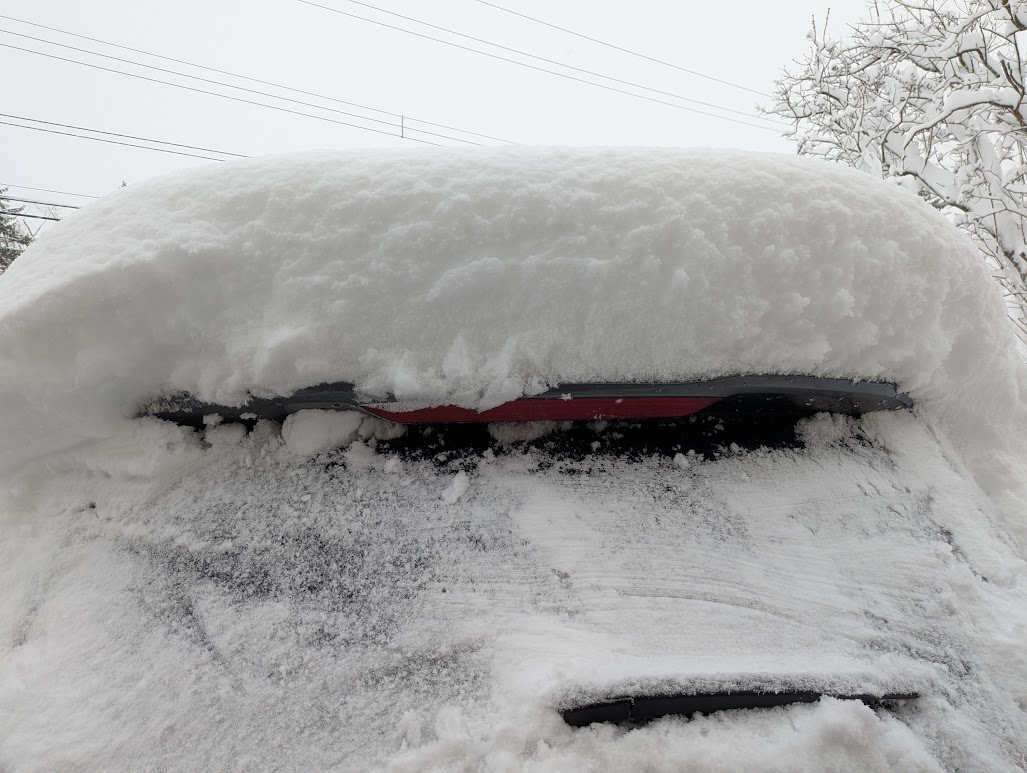
Credit: Tom Sofield/NewtownPANow.com
As snow stops and the plow crews clear the roads, clearing the driveway is only half the battle.
Under state law, drivers must also clear their vehicles of snow and ice before hitting the roadways.
Advertisements
Pennsylvania’s vehicle code requires drivers to make “reasonable efforts” to remove accumulated snow or ice from all surfaces of a vehicle, including the hood, trunk, and roof, within 24 hours of a storm’s conclusion, according to PennDOT.
The law is designed to prevent the crashes and “near-misses” that frequently occur when frozen debris dislodges from passenger cars and commercial trucks at high speeds.
Failure to clear a vehicle can be costly, even if no crash occurs.
Advertisements
According to PennDOT, police can issue a $50 fine for each offense of uncleared snow, regardless of whether any debris actually falls off the vehicle.
The penalties escalate significantly if dislodged snow or ice causes an incident.
Advertisements

If falling ice strikes another vehicle or a pedestrian resulting in death or serious bodily injury, the driver faces fines ranging from $200 to $1,500 per offense.
Under a separate section of the state vehicle code, it is unlawful to operate a vehicle if snow or ice on the windshield, side windows, or rear window “obstructs, obscures or impairs” the driver’s clear view of the highway.
PennDOT said that removal of snow and ice is the only way to ensure safety.
Advertisements


Uncleared snow on the roof often slides forward during braking or flies backward into the path of other motorists.